
In January 2024, California-based robotics startup Figure signed a landmark commercial agreement with BMW Manufacturing to deploy humanoid robots at the automaker’s Spartanburg facility in South Carolina. This deployment represents the first commercial integration of humanoid robots in the automotive sector, aiming to automate hazardous and repetitive assembly tasks. By pairing physical bipedal machines with advanced artificial intelligence, the partnership seeks to solve persistent labor shortages and improve operational safety on the factory floor.
Bridging the Gap Between Software and Hardware
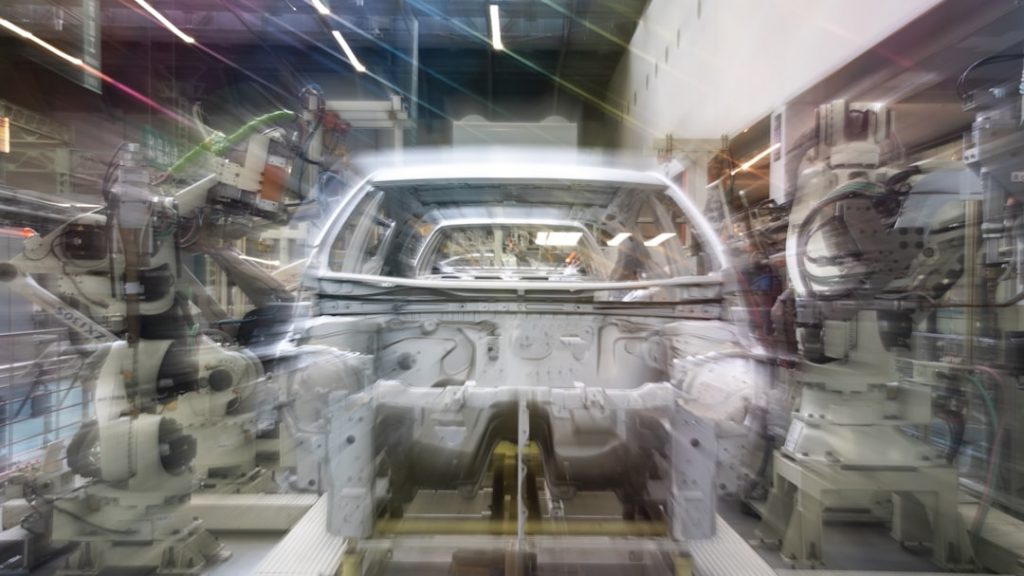
For decades, industrial automation relied on stationary robotic arms programmed for highly specific, repetitive tasks. These traditional systems operate within safety cages, unable to adapt to changes in their environment without extensive manual reprogramming. The integration of large language models (LLMs) and computer vision has fundamentally changed this paradigm, giving rise to “embodied AI.”
Embodied AI refers to artificial intelligence systems that interact directly with the physical world through sensors and actuators. Recent breakthroughs in neural networks allow these robots to translate visual inputs into physical actions in real-time. According to researchers at Stanford University, the convergence of generative AI and robotics has shortened the development cycle of physical tasks from years to weeks. Neural networks can now run millions of physics simulations in parallel, allowing a robot to master complex manipulation tasks in virtual environments before ever executing them on a physical factory floor.
Inside the Deployment: Figure 01 at BMW
The Figure 01 robot stands five feet, six inches tall, weighs 130 pounds, and can lift up to 44 pounds. Powered by proprietary electric actuators, the machine mimics human kinematics to navigate environments designed for human workers. Under the new agreement, the robots will initially integrate into the sheet metal press shop, body shop, and warehouse operations at the South Carolina plant.
The integration process at BMW is structured in distinct phases. The initial phase focuses on training the robots to perform low-complexity tasks, such as retrieving parts and placing them into fixtures. As the AI models ingest more operational data, the robots will transition to more complex assembly duties. Figure’s engineers estimate that the cost of operating these robots could eventually drop to $10 per hour, offering a highly competitive economic alternative to traditional labor in high-cost regions.
A key technological milestone occurred in March 2024, when Figure demonstrated its robot utilizing a visual-language-action model developed in collaboration with OpenAI. In a demonstration, the robot processed spoken requests, identified objects on a table, and handed an apple to a human tester while explaining its reasoning. This level of cognitive processing allows the robot to handle variable manufacturing tasks, such as manipulating flexible cables or sorting mismatched parts, which historically stumped traditional automation.
The Global Race for Humanoid Supremacy
BMW is not alone in its pursuit of humanoid labor. A report by Goldman Sachs Research predicts that the global market for humanoid robots could reach $38 billion by 2035, driven by rapid advancements in AI and declining component costs. The investment bank projects that robot shipments to factories could begin in significant volumes by 2025 to 2028.
Competitors are rapidly advancing their own platforms to capture this emerging market. Tesla continues to develop its Optimus robot, with CEO Elon Musk claiming the machines could perform useful factory tasks by the end of 2024. Meanwhile, Boston Dynamics recently retired its hydraulic Atlas robot in favor of an all-electric model designed specifically for commercialization, and Apptronik is testing its Apollo humanoid robot with Mercedes-Benz.
Industry Implications and Workforce Dynamics
The shift toward humanoid automation comes at a critical time for global manufacturing. A study by Deloitte and The Manufacturing Institute projects that the United States alone could face a shortage of 2.1 million skilled manufacturing jobs by 2030. Proponents argue that humanoid robots will fill these gaps, taking over the “dull, dirty, and dangerous” tasks that human workers increasingly avoid.
However, the rapid pace of development has ignited debates over workforce displacement and safety. Labor advocates argue that widespread adoption could threaten entry-level manufacturing positions, requiring aggressive retraining programs for human workers. Furthermore, safety standards must evolve to govern how heavy, autonomous bipedal machines operate alongside human employees without physical barriers.
What to Watch Next
In the coming months, industry observers should watch the performance metrics of Figure 01 during its initial trial phase in Spartanburg. The primary technical hurdles remain durability, battery life, and real-world reliability over multi-shift operations. If these trials prove successful, they will likely trigger a wave of commercial orders across other heavy industries, transforming the global supply chain.
Additionally, regulatory bodies like the Occupational Safety and Health Administration (OSHA) are expected to begin drafting new guidelines specifically tailored to autonomous humanoid co-workers. As hardware costs continue to fall and AI models become more computationally efficient, the transition from experimental pilots to permanent robotic workforces appears closer than ever before.