
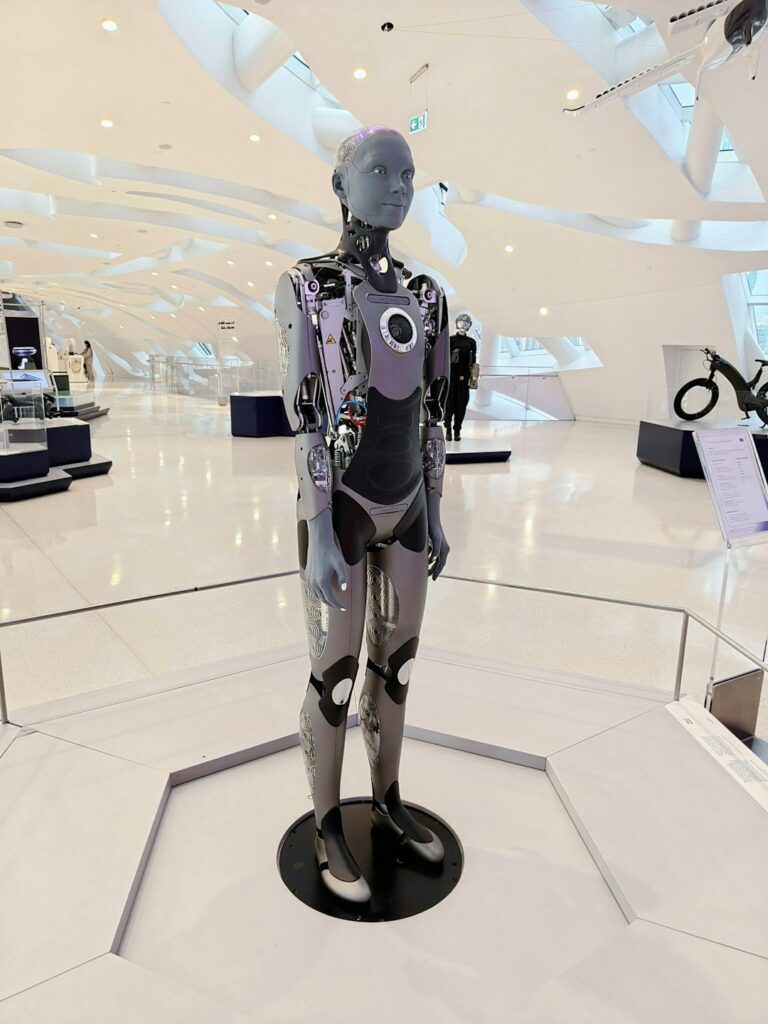
BMW, Mercedes-Benz, Amazon, and Tesla have begun deploying humanoid robots inside production-grade facilities between late 2024 and mid-2025, marking the first broad commercial move of machines that trained their movements in simulated worlds before entering real assembly lines. The trigger is an AI shift: memory and reasoning models, similar to those used in ChatGPT, are now controlling robot actuators, a development championed by NVIDIA, Figure, Apptronik, and researchers at top AI labs. The result is a new wave of robotic workers that can handle complex tasks, spot their own errors, and run for hours without retraining, shrinking the gap between industrial robotics and one of the biggest open promises in factory automation: machines that actually think.
Vestiges of the old industrial robot
For most of the past century, industrial robots were mechanical arms, hardcoded to repeat point-to-point paths. They excelled at welding, painting, and palletizing—work that required little deviation. But any part change, camera mirage, or sharp corner forced a human engineer to spend hours refreshing code.
The 2,500 robots inside automotive plants worldwide, according to the International Federation of Robotics 2024 report, have expanded rapidly, but the bigger precision was held back by high cost and low adaptability. The IFR counts more than 4.2 million operational robots globally in 2024, but the vast majority still live in highly structured environments where the world is still virtual in code.
What changed is that expensive autonomous systems now learn how the world responds, rather than being told how to push it.
What is happening, and five reasons now
March 2025 marked a turning point: NVIDIA’s GTC global conference in San Jose plugged its GR00T root models relationally into silicon, and spectator companies such as 1X, Figure, and XPeng announced humanoid prototypes were moving to commercial tasks. In April and May 2025, two of the largest vehicle and logistics makers disclosed second-generation pilots: a BMW plant in Spartanburg, South Carolina, recorded a stage of Figure-02 greasing channels, while Tesla’s expansion of its Optimus fleet in Fremont is scheduled to reach over 100 machines by the third quarter of the year.
The