
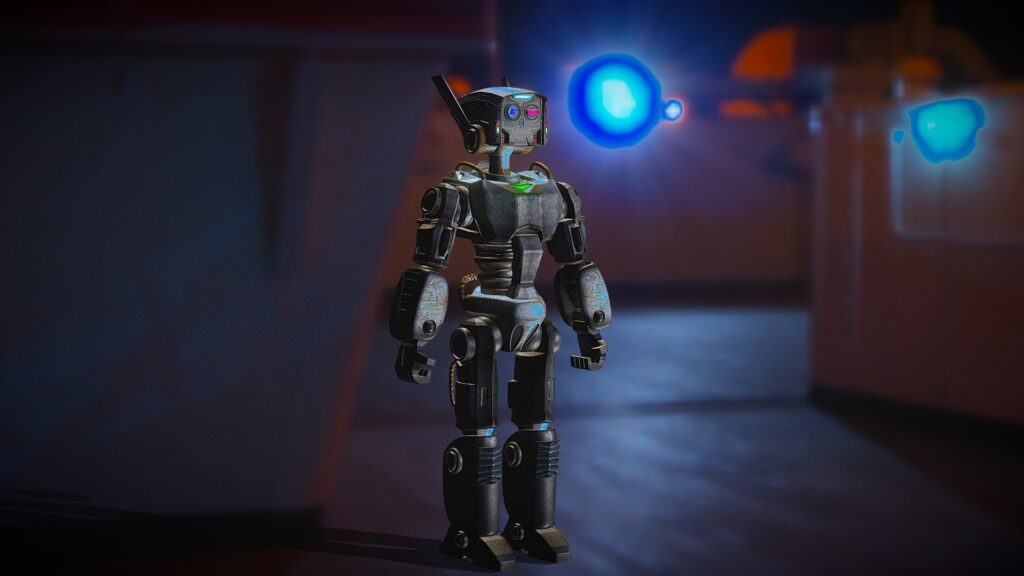
Humanoid robots are stepping out of trade-show demonstrations and into paid industrial work. Over the past year, BMW, Amazon and other major employers have begun piloting machines built by Figure AI and Agility Robotics, while NVIDIA, Microsoft and OpenAI-backed startups have funneled hundreds of millions of dollars into the technology. The shift, unfolding on factory floors and distribution centers across North America and Europe, is driven by stubborn labor shortages and rapid advances in machine learning that finally allow robots to cope with the unpredictable physical world.
From Trade-Show Demos to Factory Floors
For decades, industrial robots have been caged, single-purpose machines. They weld, lift and paint with superhuman precision, but they cannot operate in environments built for people.
A humanoid, in theory, changes that equation. A machine shaped like a worker can use existing tools, climb existing stairs and slot into existing workflows without facilities being rebuilt around it.
That theory is now being tested at scale. Figure AI’s Figure 01 began trial work at BMW’s Spartanburg, South Carolina, plant in early 2024, handling sheet-metal parts. Amazon has tested Agility Robotics’ Digit in its fulfillment operations since late 2023, and Agility has opened a factory in Oregon to mass-produce the robot.
Boston Dynamics, long known for viral robot videos, unveiled an all-electric version of its Atlas humanoid in April 2024, designed explicitly for commercial deployment rather than laboratory research.
The pace matters because previous waves of automation took decades to spread. Humanoid developers are promising commercial fleets within two to three years, compressing a cycle that once stretched across a generation.
Billions Follow the Pilots
Capital is following the deployments. Figure AI raised $675 million in February 2024 at a $2.6 billion valuation, in a round that included Microsoft, the OpenAI Startup Fund, NVIDIA, Intel Capital and Jeff Bezos.
Rivals are scaling up too. OpenAI-backed 1X Technologies and Austin-based Apptronik, whose Apollo robot is being tested by Mercedes-Benz, have each raised nine-figure sums. Tesla is developing its Optimus humanoid, and CEO Elon Musk has suggested it could eventually sell for under $20,000 — a claim analysts view cautiously given repeated timeline slips.
Venture funding for robotics has rebounded overall after a lean stretch for deep-tech startups, according to PitchBook data, as investors bet that AI breakthroughs will finally make general-purpose machines viable.
Machine Learning Is the Missing Piece
The decisive breakthrough is computational, not mechanical. For years, humanoids could walk and grip but struggled to interpret messy, unstructured environments — the kind that define real workplaces. That changed as researchers adapted the foundation-model techniques behind large language models to robotics.
NVIDIA leaned into the shift at its GTC conference in March 2024, unveiling Project GR00T, a general-purpose foundation model designed to let humanoids learn tasks from language, video and human demonstration. “Building foundation models for general humanoid robots is one of the most exciting problems in AI today,” NVIDIA CEO Jensen Huang said at the event.
Startups are taking similar paths. Figure trains its machines through imitation learning, in which robots copy movements captured from human operators. San Francisco-based Physical Intelligence, founded by robotics veterans from Google DeepMind, raised $70 million to build general-purpose software “brains” for any robot body.
What the Numbers Say
Forecasts have swung accordingly. In January 2024, Goldman Sachs analysts raised their projection for the humanoid robot market to $38 billion by 2035, up from an earlier $6 billion estimate, citing faster-than-expected progress in hardware and AI. Morgan Stanley goes further, estimating the sector could be worth roughly $5 trillion by 2050.
Employer interest is rooted in demographics. The Manufacturing Institute and Deloitte projected that about 2.1 million U.S. manufacturing jobs could go unfilled by 2030 as baby boomers retire and fewer young workers enter the trades.
The installed base is already large. The International Federation of Robotics reported roughly 553,000 industrial robot installations worldwide in 2022, the second-highest year on record — and humanoids are positioned as the next wave.
Labor Questions Loom
Labor advocates urge caution. Union representatives and robotics researchers note that automation has historically displaced routine roles faster than it created new ones. Economists at MIT have documented that robots reduce employment in exposed local labor markets even as productivity rises.
Companies running the pilots say the machines are meant to fill jobs employers cannot staff. “There are millions of unfilled jobs, and these robots are going to be essential to the future of the workforce,” Figure AI CEO Brett Adcock said when announcing the BMW partnership.
What to Watch Next
Analysts say the next 18 months will show whether humanoids can graduate from pilots to fleets. Key signals include pay-per-hour “robots-as-a-service” pricing, deployments beyond warehouses into retail and healthcare, and the first safety standards for machines working alongside people.
Regulatory attention is building as well, with U.S. and European agencies beginning to examine how general-purpose robots should be certified. For now, the industry’s bet is simple: build the hardware, teach it with AI, and let the labor market do the rest.