
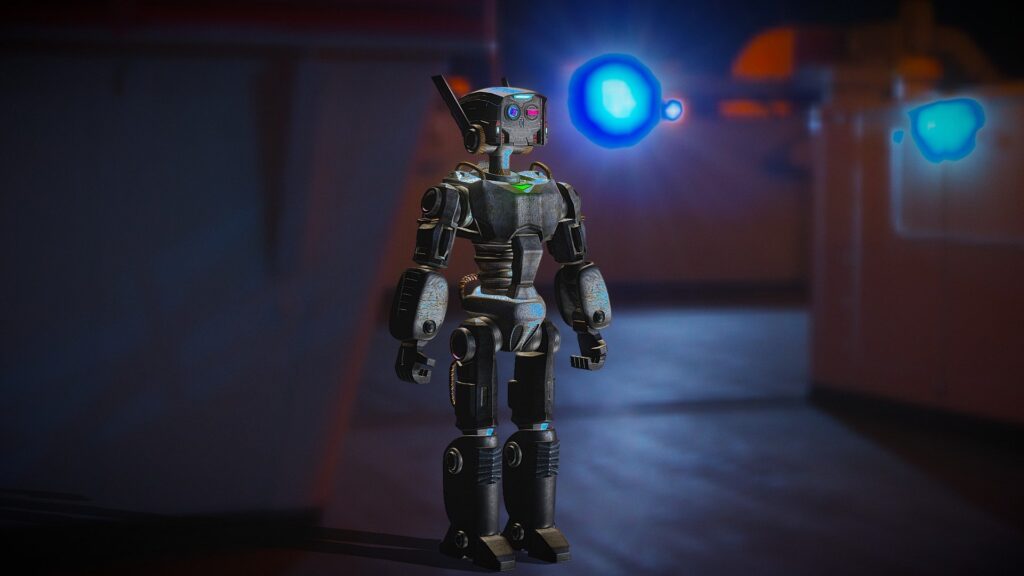
Humanoid robots are leaving the laboratory and entering the workforce, as manufacturers and logistics companies across North America, Europe and Asia deploy AI-powered machines on live production floors. The shift accelerated through 2024 and 2025, propelled by breakthroughs in machine learning and persistent labor shortages. Analysts now frame the question not as whether humanoids will work alongside people, but how quickly adoption will spread.
From Caged Machines to General-Purpose Workers
For decades, industrial robots operated behind safety fences, repeating single tasks such as welding, painting or palletizing. They were powerful but rigid, unable to cope with variation.
Humanoids break that model. The human form fits a world designed for people — stairs, doorways, tools and vehicles — without expensive facility redesign. Aging workforces and chronic shortages in manufacturing, warehousing and elder care sharpen the business case.
The missing ingredient was intelligence. New vision-language-action models let machines interpret images, follow natural-language instructions and convert both into movement. NVIDIA launched its Project GR00T foundation model for humanoids in 2024, and Figure AI followed with its Helix system in 2025.
Pilots Move From Demo to Deployment
Real-world testing is underway at recognizable companies. BMW began piloting Figure’s robots at its Spartanburg, South Carolina plant in 2024, starting with sheet-metal handling. Mercedes-Benz is evaluating Apptronik’s Apollo units at its Kecskemet plant in Hungary.
In logistics, GXO deployed Agility Robotics’ Digit for repetitive warehouse work in Georgia, and Amazon confirmed tests of the same robot at its facilities. Tesla continues developing Optimus, which CEO Elon Musk has predicted could eventually represent the majority of the company’s value.
These remain pilots rather than mass rollouts. Machines typically work limited shifts under human supervision, and companies publish few performance metrics. Still, the move from staged demonstrations to operating facilities marks a turning point for the industry.
The AI Brain Behind the Bodies
Hardware alone does not explain the momentum. Foundation models trained on video, simulation and teleoperation data now give robots generalization skills that scripted software never offered.
NVIDIA CEO Jensen Huang has called this convergence the rise of physical AI, positioning his company’s chips and simulation platforms as the backbone of the emerging sector. Startups such as Physical Intelligence and Skild AI are building similar generalist robot brains.
Developers increasingly train robots in simulation before transferring skills to physical machines, cutting development time and cost. Cross-embodiment learning, in which one model controls different robot bodies, has become a central research goal.
Money Flows Into a New Machine Economy
Capital is following the demonstrations. Figure AI raised $675 million in early 2024 at a $2.6 billion valuation, with backing from Microsoft, NVIDIA, the OpenAI Startup Fund and Jeff Bezos. Physical Intelligence collected roughly $400 million in late 2024 to pursue general-purpose robot intelligence.
Forecasts vary widely but point the same direction. Goldman Sachs projects the humanoid market could reach $38 billion by 2035, and its analysts report that hardware costs fell roughly 40 percent year over year. Morgan Stanley estimates more than one billion humanoids could be in operation by 2050.
China is investing heavily as well. Unitree sells its G1 humanoid for about $16,000, UBTech has placed Walker S units on electric-vehicle assembly lines, and government programs target mass production within the decade.
What It Means for Workers and Industry
Labor implications divide economists. Vendors pitch humanoids for dangerous, repetitive jobs, while unions warn that displacement could outpace retraining programs. Early deployments suggest task-level change: robots absorb narrow roles such as parts transfer while humans retain supervision and fine dexterity.
Safety standards lag deployment. International bodies are only beginning to adapt rules written for caged arms to machines that share open floors with people, and insurers have yet to price the risk maturely.
Business economics also remain unproven. Units from Western developers still cost hundreds of thousands of dollars, and reliability must improve before round-the-clock operation pays off. Goldman Sachs expects costs to fall further as production scales.
For companies weighing adoption, the practical advice from analysts is consistent: identify narrow, high-repetition tasks, run supervised pilots, and track reliability data rather than demo videos.
What to Watch Next
The next 12 to 24 months will test whether pilots convert into purchases. Key indicators include Amazon’s and BMW’s expansion decisions, Figure’s planned manufacturing capacity, and Tesla’s Optimus production timeline.
Watch also for standardized safety certifications, independently published reliability figures, and pricing moves from Chinese manufacturers that could compress costs across the industry. Home robots, led by firms such as 1X Technologies, could widen the market beyond factories later in the decade. If those signals align, analysts expect broader commercial adoption to start in logistics and spread from there.