
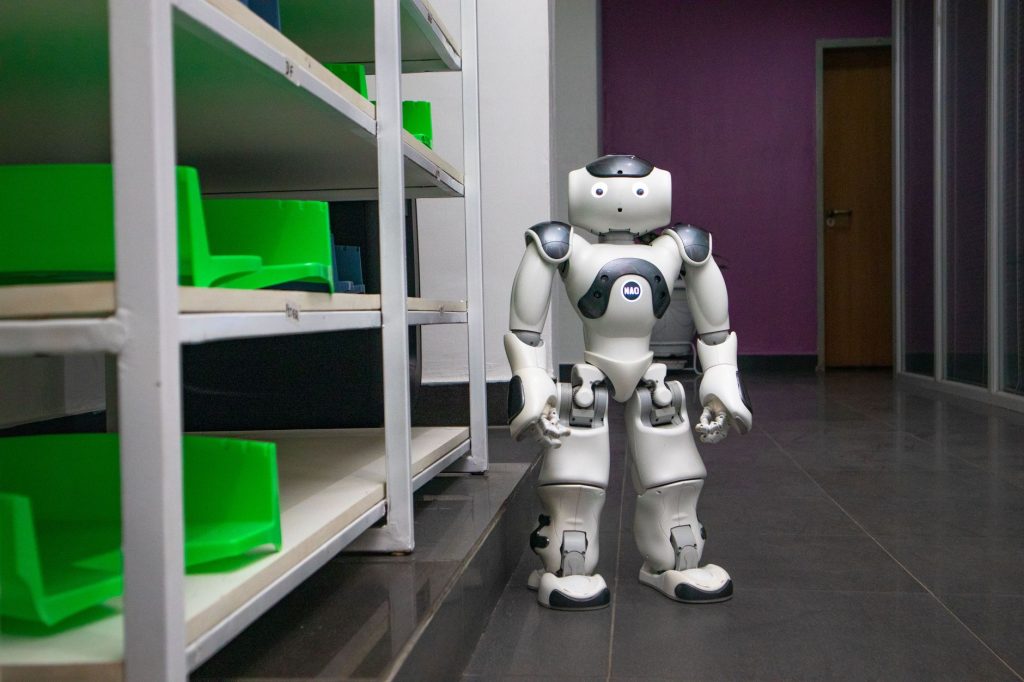
MUNICH and SILICON VALLEY — A new generation of robots that combines large language models with physical dexterity is moving out of research labs and into commercial pilots. Companies including Figure AI, Tesla, Agility Robotics, and Boston Dynamics are deploying humanoid machines in warehouses, factories, and logistics hubs throughout 2025. Backed by advances from Google DeepMind, NVIDIA, and UC Berkeley, these systems are learning to perceive, reason, and act in the real world.
Context: From Chatbots to Embodied Agents
For a decade, breakthroughs in machine learning largely happened in the digital realm. Large language models like GPT-4 and Google Gemini mastered text, images, and code. But the physical world remained stubbornly hard for robots: locomotion, manipulation, and adaptation to unstructured environments require more than pattern recognition.
Researchers are now bridging that gap. By integrating vision-language-action models with reinforcement learning, robots can parse natural language instructions, map them to physical actions, and improve from trial and error. In 2024, Figure AI demonstrated a humanoid robot that could converse with a human while handing them an apple, powered by an OpenAI model. This year, similar systems are operating for longer stretches without human intervention.
Investment and Deployment Surge
Capital is flooding into the sector. According to Crunchbase data, AI robotics startups raised more than $6.8 billion in 2024, a 42% increase from the previous year. Goldman Sachs Research projects the humanoid robot market could reach $38 billion by 2035, driven by labor shortages in logistics, manufacturing, and elder care.
Deployments are accelerating. Agility Robotics opened a factory in Salem, Oregon, to mass-produce its Digit robot, which already works in Spanx warehouses. Tesla aims to have Optimus robots performing internal tasks by the end of 2025, with external sales planned later. Boston Dynamics, now owned by Hyundai, has transitioned Atlas from hydraulic research platform to an electric commercial product. The International Federation of Robotics reported that annual robot installations surpassed 500,000 units in 2024, with automotive and electronics sectors leading demand.
Machine Learning Breakthroughs
The latest advances hinge on a technique called imitation learning, combined with large-scale simulation. Robots train in virtual environments where they can practice millions of manipulations, then transfer those skills to physical bodies using neural networks. Researchers at NVIDIA and UC Berkeley have shown that a single model can control different robot embodiments, a step toward general-purpose robotics.
Reinforcement learning also plays a critical role. By rewarding successful actions and penalizing failures, robots develop robust grasping and walking strategies. A 2025 paper from Google DeepMind demonstrated a robot that learned to open doors, drawers, and cabinets in unseen environments with 90% success rate, up from 45% a year earlier.
Expert Perspectives: Promise and Caution
Industry analysts see this as a platform shift. Ken Goldberg, a robotics professor at UC Berkeley, argues that the shift is driven by software that lets robots reason about what they see, not just hardware improvements. ‘The key is not only better actuators; it is the neural network that decides which actuator to move and why,’ he said during a recent robotics forum.
Others caution about the hype cycle. Gartner placed humanoid robots on its 2025 Hype Cycle, predicting mainstream adoption is 10 to 15 years away. Analysts note that batteries, actuators, and onboard compute all need dramatic improvements before these machines can operate reliably outside controlled environments.
Challenges and Implications
Technical hurdles persist. Humanoid robots consume large amounts of power, limiting runtime to a few hours. They struggle with tasks requiring fine tactile feedback, such as threading a needle or handling fragile objects. Safety standards for human-robot collaboration are still evolving, and regulators have yet to establish certification frameworks for autonomous machines in public spaces.
There are also workforce implications. While proponents argue robots will fill labor gaps, unions and worker advocacy groups worry about job displacement. A McKinsey Global Institute report estimates that automation could displace up to 12 million workers in the United States by 2030, while also creating new roles in robot maintenance, supervision, and AI training. For business leaders, the near-term opportunity lies in augmenting human workers, not replacing them entirely.
What to Watch Next
The next 12 months will reveal whether humanoid robots can sustain long-duration operations in messy, real-world settings. Watch for pilot results from automotive factories, where Tesla, BMW, and Mercedes-Benz are testing robots on assembly lines. Also monitor the emergence of foundation models for robotics, similar to GPT for language, which could allow robots to share learned skills across different bodies. If those models scale, the vision of a general-purpose robot in every home may shift from science fiction to engineering roadmap.