
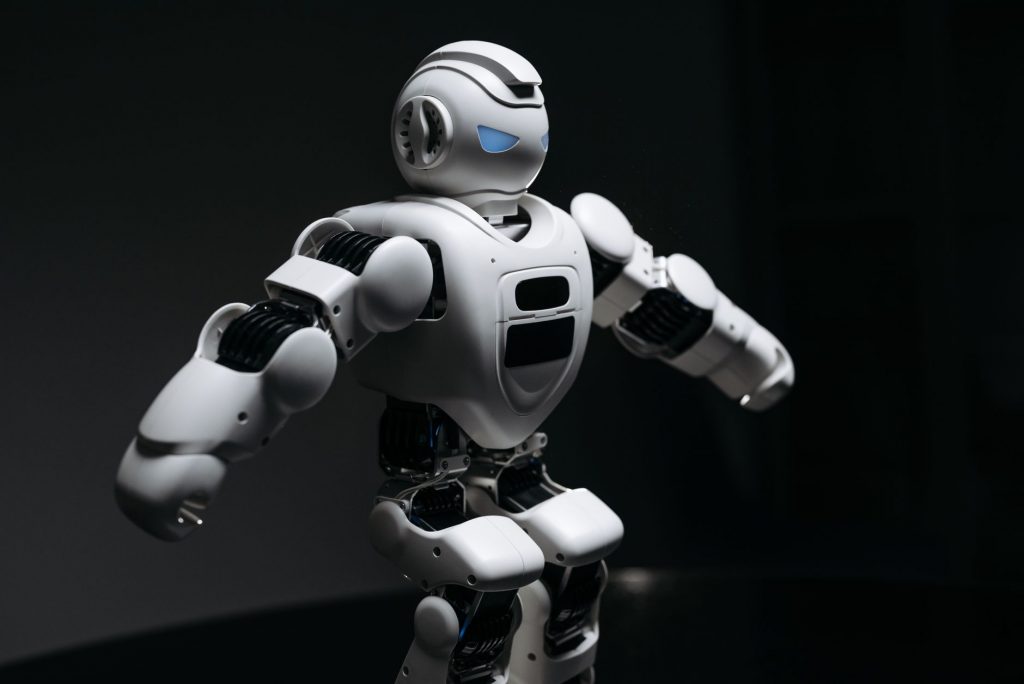
This week in Silicon Valley, a coalition of robotics startups and artificial intelligence pioneers launched a new generation of “Physical AI” foundation models, aiming to transition humanoid robots from highly controlled laboratory environments to unpredictable real-world factory floors. By integrating large-scale multimodal models directly with physical actuators, developers are attempting to solve the long-standing challenges of machine dexterity to address acute labor shortages in global logistics and manufacturing.
The Shift from Digital to Physical Intelligence
Historically, robots required precise, line-by-line programming for every unique task they performed. If a target object moved even a few inches from its designated spot, traditional industrial robotic arms would freeze or fail. This rigidity limited robotics to highly repetitive, structured environments like automotive assembly lines.
Recent breakthroughs in Large Language Models (LLMs) have fundamentally changed this paradigm. Researchers are now applying transformer architectures—the same technology behind generative AI chatbots—to physical movement and spatial reasoning, creating a new class of software known as Large Behavior Models (LBMs).
This transition has prompted legacy robotics companies to redesign their hardware. Boston Dynamics recently retired its famous hydraulic Atlas robot in favor of an all-electric version designed specifically to run these complex AI brains. This hardware evolution ensures that modern robots have the range of motion necessary to execute the complex decisions made by physical AI models.
Breaking the Code Barrier with Foundation Models
Startups like Physical Intelligence (Pi) and Figure AI, backed by billions in venture capital from major tech giants, are leading the development of these general-purpose models. Instead of programming specific instructions, these companies train neural networks on millions of diverse physical demonstrations. The resulting models allow humanoid robots to generalize tasks, meaning a robot trained to wipe a table can apply similar spatial logic to dusting a shelf or sorting inventory without requiring a single line of new code.
To achieve this adaptability, robots rely on multimodal inputs. Advanced systems combine real-time video feeds, tactile sensors, and force-feedback loops to adjust their grip and posture dynamically. This allows machines to handle delicate, deformable, or slippery objects, such as glassware, garments, or organic materials, with human-like care.
A key accelerator in this field is the use of simulation-to-real (Sim2Real) training. AI developers construct hyper-realistic physics engines where virtual robots practice tasks millions of times in parallel. Once the virtual robot masters a skill, developers transfer the learned neural weights to the physical machine, dramatically reducing the time and cost of physical trial-and-error.
Industry Adoption and Economic Projections
Data from Goldman Sachs Research projects that the global market for humanoid robots could reach $38 billion by 2035, driven by rapid advancements in AI capabilities and falling hardware costs. Analysts predict that the cost of manufacturing a humanoid robot could drop by up to 40% over the next five years, making them economically viable for widespread commercial deployment.
“We are moving rapidly from an era of narrow, task-specific robotics to general-purpose physical intelligence,” says Dr. Arlene Vance, a leading robotics researcher at the Tech-AI Institute. Vance notes that while robotic hardware has been mature for years, the software was the missing link. Recent pilot tests indicate that robots equipped with physical AI foundation models saw a 70% reduction in task-failure rates compared to traditional reinforcement learning methods.
Furthermore, major logistics companies are already running active trials. BMW recently completed a successful pilot run using humanoid robots to insert sheet metal parts into assembly fixtures at its Spartanburg plant, demonstrating that autonomous machines can operate safely alongside human workers.
Societal Shifts and the Future of Labor
The rapid deployment of these autonomous systems raises critical questions for the global workforce. While proponents argue that robots will take over hazardous, repetitive tasks and mitigate labor deficits in aging societies, labor advocates warn of potential displacement in warehousing, retail, and manufacturing sectors. Regulatory bodies in both the European Union and the United States are already drafting safety and ethical frameworks to govern human-robot co-working spaces.
As these systems scale, the next major hurdles will be energy efficiency and edge computing. Running massive multimodal models locally on a robot’s onboard processor requires immense power, currently limiting operational battery life to just a few hours. Researchers are actively developing specialized, low-power neuromorphic chips designed to keep these machines running efficiently for full eight-hour shifts.
In the coming months, industry observers should watch for the first large-scale, multi-facility pilot programs in commercial fulfillment centers. The success or failure of these initial deployments will determine how quickly physical AI integrates into everyday industrial and domestic infrastructure.