
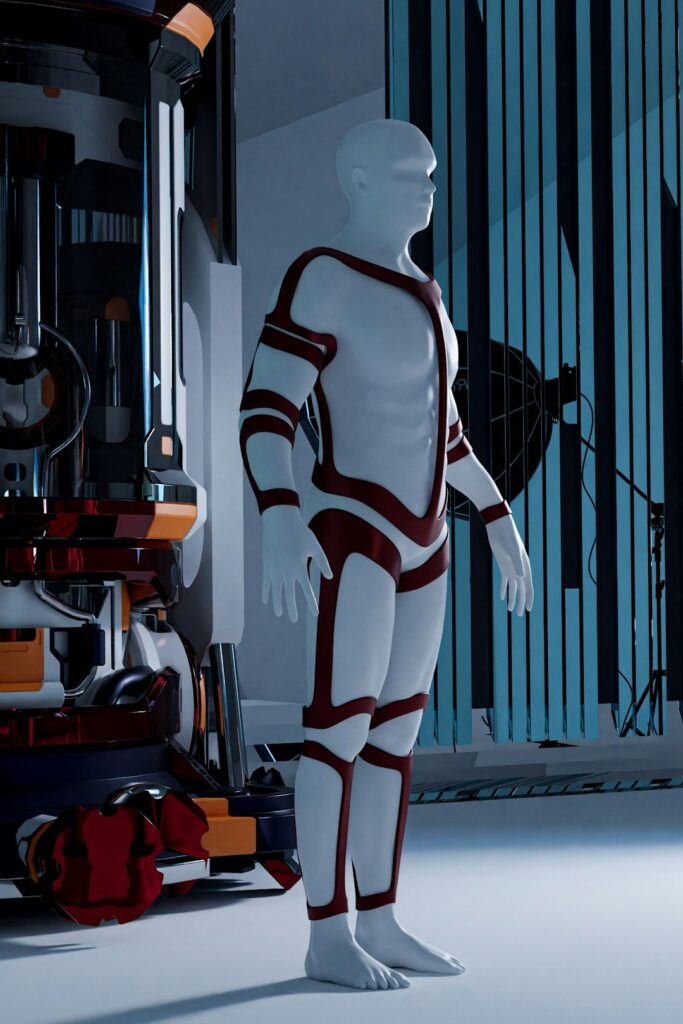
Humanoid robots are stepping out of research labs and into commercial workplaces at a pace industry analysts did not expect until the 2030s. On Tuesday, Figure AI announced that its Figure 02 robots have begun performing logistics tasks at a major shipping facility in Texas, while rivals Agility Robotics and Tesla reported expanded pilot programs of their own. The announcements, made within a single week, signal that general-purpose humanoid robots have crossed an early commercial threshold.
Why Humanoids, and Why Now
For decades, robots in industry meant fixed arms on assembly lines, caged off from human workers. Humanoids change that equation. Their human-like form allows them to operate in environments built for people, including warehouses, hospitals, and retail spaces, without costly redesigns.
The timing is driven by three converging factors. First, advances in machine learning, particularly large vision-language-action models, have given robots the ability to interpret unstructured environments. Second, hardware costs have fallen sharply as electric actuators and precision sensors scale up production. Third, persistent labor shortages in logistics and manufacturing have pushed companies to fund automation aggressively.
Goldman Sachs Research projected in 2024 that the global humanoid robot market could reach $38 billion by 2035, up from a previous forecast that assumed slower adoption. Morgan Stanley analysts estimate more than one billion humanoid robots could be in use by 2050.
Inside the New Wave of Deployments
Figure AI’s Texas deployment marks one of the first paid commercial placements of a general-purpose humanoid robot in the United States. The company says its robots are handling tote sorting and material transport, tasks that historically suffered high turnover rates.
Agility Robotics, based in Oregon, has taken a different route with its Digit robot, which has been tested by Amazon and logistics firm GXO. Digit focuses on a narrower set of warehouse tasks, a strategy that prioritizes reliability over versatility.
Tesla, meanwhile, continues development of its Optimus robot. CEO Elon Musk said in October 2024 that Optimus units were performing tasks in Tesla factories, though independent verification of the robot’s capabilities remains limited. Tesla has not disclosed commercial deployment timelines.
In Asia, China’s Unitree Robotics has gained attention for low-cost humanoids priced under $100,000, a fraction of the cost of earlier research platforms. The company’s G1 model, launched in May 2024, has become a popular tool for universities and startups building robot applications.
The Machine Learning Breakthroughs Behind the Machines
The critical shift is in software. Traditional industrial robots follow pre-programmed motions in carefully staged settings. The new generation learns from demonstration and adapts on the fly.
Researchers at Stanford, Carnegie Mellon, and Google DeepMind have published work showing that models trained on diverse robot data can generalize to new tasks. Google DeepMind’s RT-2 system, introduced in 2023, demonstrated that a robot could transfer knowledge from web-scale vision and language data to physical actions.
“We are seeing a transition from robots that execute scripts to robots that understand context,” said Dr. Chelsea Finn, associate professor at Stanford University, whose lab studies robot learning. “The bottleneck is no longer mechanical dexterity. It is data.”
Data has indeed become the industry’s central challenge. Unlike text or images, real-world robot training data is scarce and expensive to collect. Companies are responding with teleoperation programs, in which human operators remotely control robots to generate training examples, and with simulation platforms that generate synthetic experience at scale.
Economic Stakes and Labor Questions
The labor implications are significant. The U.S. Bureau of Labor Statistics projects roughly 1.9 million manufacturing job openings could go unfilled through 2033 if workforce trends continue. Automation advocates argue humanoids will fill gaps rather than displace workers, targeting dangerous or repetitive roles.
Labor economists are less certain. A 2023 paper by researchers at MIT and Boston University estimated that industrial robots reduced employment and wages in affected local labor markets during earlier automation waves. Whether humanoids repeat that pattern depends on how quickly adoption spreads and which job categories absorb the impact.
“The question is not whether these machines work, but who captures the productivity gains,” said Dr. Daron Acemoglu, MIT economist and 2024 Nobel laureate, in published remarks on automation policy. Policymakers in the European Union and several U.S. states have begun examining frameworks for workplace robot safety standards.
Safety, Standards, and the Road Ahead
Working alongside humans raises unresolved safety questions. The International Organization for Standardization released updated guidelines in 2024 covering collaborative robot safety, but standards specific to humanoids are still in development.
Insurers and regulators are watching closely. Early deployments typically keep robots in zones separated from human workers or operate under continuous human supervision, an arrangement that limits productivity claims but manages risk.
Investors have taken note. Venture funding for robotics startups exceeded $12 billion globally in 2024, according to Crunchbase data, with humanoid developers capturing a growing share. Figure AI’s valuation reportedly reached $39 billion following a funding round earlier this year.
What to Watch Next
Analysts say the next 18 months will test whether early deployments translate into durable business models. Key indicators include retention rates for robot labor contracts, published reliability metrics, and whether any manufacturer achieves volume production above 10,000 units annually.
Watch also for progress on data. Partnerships between robot makers and AI labs, announcements of large-scale teleoperation workforces, and new foundation models trained on robot data will signal how quickly the industry closes the learning gap.
For businesses in logistics, manufacturing, and healthcare, the practical advice from analysts is straightforward: begin evaluating automation readiness now, because the timeline for capable, general-purpose robots keeps moving earlier.